
How Solar Power Systems Work in South Africa for Homes and Businesses

How Solar Power Systems Work in South Africa for Homes and Businesses
Solar power has become one of the most talked-about energy solutions in South Africa, and for good reason. Homeowners are looking for better ways to reduce their reliance on the grid, while businesses are under growing pressure to manage electricity costs, maintain uptime, and plan more effectively for an unpredictable energy environment. In both cases, solar offers a practical and increasingly accessible option.
Still, many people begin at the same point: they understand that solar can help, but they are not entirely sure how a solar power system actually works. They may know that solar panels go on the roof and that batteries store energy, but the full process from sunlight to usable electricity is not always clear. For someone considering an installation, that understanding matters. It helps you ask better questions, compare options more effectively, and choose a solution that is aligned with your real needs.
At its core, a solar power system converts sunlight into electricity that can be used to power a home or business. Depending on the type of system and how it is designed, electricity can be used immediately, stored for later use, or combined with a grid supply to create a more stable and efficient energy setup. In South Africa, where electricity costs and supply concerns continue to shape buying decisions, the design of that system matters just as much as the hardware itself.
If you are still exploring the basics, APS offers a broader overview of solar power systems for South African homes and businesses that complements this guide.
This article explains how solar power systems work in South Africa, what components make up a typical installation, how residential and commercial needs differ, and what property owners should understand before investing in a system.
Why solar power has become so relevant in South Africa
South Africa’s energy landscape has made solar more than just an alternative technology. For many people, it has become part of a long-term strategy to manage risk, improve resilience, and control costs more effectively.
Households have had to adapt to interruptions in supply, rising electricity tariffs, and the inconvenience of being dependent on a system they cannot fully control. Businesses face even greater pressure. A power disruption may affect productivity, client service, security systems, internet connectivity, refrigeration, operations, machinery, and overall profitability. Even short interruptions can create downstream costs that go beyond the electricity bill itself.
Solar has become attractive because it addresses several of these challenges at once. It allows homes and businesses to generate some of their own electricity during the day. When combined with the right inverter and battery setup, it can also provide backup support during outages. Over time, it may help reduce reliance on traditional supply while improving visibility into energy usage and spend.
South Africa also has strong solar potential. Many parts of the country receive high levels of sunlight for much of the year, which means a well-designed solar system can generate meaningful value when installed and sized correctly. That does not mean every property should have the same solution, but it does mean solar is a very practical option for a wide range of residential and commercial applications.
What a solar power system actually does
A solar power system takes energy from the sun and converts it into electricity that your property can use. This electricity can power lights, appliances, equipment, computers, refrigeration, pumps, and many other systems, depending on the size and design of the installation.
The process itself is not overly complicated, but the way the system is configured can vary greatly. Some solar systems are designed mainly to reduce daytime electricity costs. Others are designed to provide backup during outages. Some are intended to cover essential loads only, while others are sized to support a larger percentage of the property’s total energy demand.
That is why it is important to see a solar power system not as one fixed product, but as a complete energy solution made up of several components working together.

The main components of a solar power system
To understand how solar works, it helps to break the system down into its main parts. Each component has a specific role, and the overall performance depends on how well those parts work together.
Solar panels
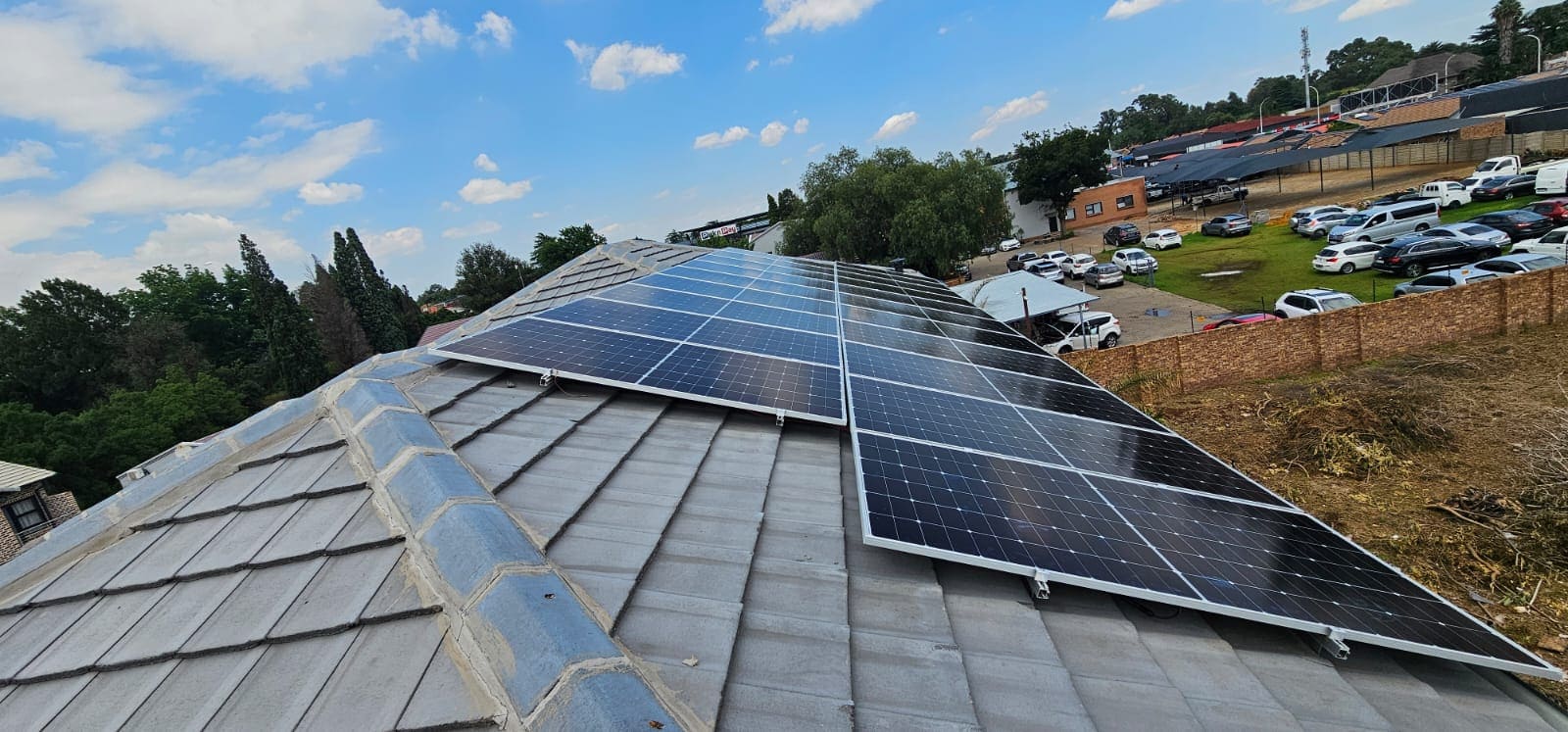
Solar panels are the part of the system that captures sunlight. They are made up of photovoltaic cells that produce electricity when exposed to sunlight. This electricity is generated as direct current, or DC power.
Panels are usually installed on rooftops, but they can also be mounted on the ground in certain applications. Their position, angle, and exposure to sunlight all affect how much electricity they can produce. Shading, roof orientation, and available space can influence performance, which is why site planning is so important.
Inverter
The inverter is one of the most important parts of the system. While solar panels generate DC electricity, most homes and businesses use alternating current, or AC electricity. The inverter converts the solar energy into a form that your property can actually use.
In modern systems, the inverter may do much more than simply convert power. It may manage the flow of electricity between the panels, batteries, load circuits, and the grid. It may also help protect the system, optimise performance, and provide monitoring data.
Batteries
Battery storage allows excess solar energy to be saved for later use. This can be especially important in South Africa, where backup power is often a key reason for investing in solar in the first place.
During the day, if your solar panels generate more electricity than the property is using, that extra power can be stored in the batteries. Later, when the sun goes down or when there is an interruption in supply, the battery can release that stored energy to power essential loads or other selected circuits.
Not every solar system includes batteries. Some are designed primarily for daytime savings and use the grid when solar generation drops. Others rely heavily on battery storage because backup performance is a major priority.
Mounting structures and electrical balance of system
A reliable solar installation includes more than just panels and an inverter. It also needs the supporting hardware and electrical infrastructure that make the system safe and durable. This includes mounting structures, isolators, breakers, cabling, protection devices, combiner boxes, connectors, and earthing components.
This part of the installation is sometimes overlooked by buyers who focus only on panel count or inverter size, but it plays a major role in long-term performance and safety.
Monitoring platform
Many solar systems include software or mobile app access that allows the owner to track performance. This can show how much electricity the panels are generating, how much is being consumed, how the batteries are performing, and when the property is drawing from the grid.
For businesses especially, monitoring is valuable because it creates visibility. For homeowners, it can also help build confidence that the system is working as expected and delivering measurable value.
How solar power flows through the system
Once the main components are in place, the energy flow becomes easier to understand.
The solar panels absorb sunlight and generate DC electricity. That electricity is sent to the inverter, which converts it into AC electricity for use in the home or business. The system will then direct that electricity according to the setup and demand on the property.
If the property needs power immediately, the solar energy is used to supply those loads directly. If there is extra solar energy available and the system includes batteries, the excess may be sent to the battery bank for storage. If the batteries are already charged and the system is configured for export, excess electricity may in some cases be sent back to the grid where regulations and approvals allow for it.
When solar generation is low, such as early in the morning, at night, or during poor weather, the system may then draw electricity from the batteries or the grid. In a hybrid system, this happens automatically based on how the installation has been programmed and prioritised.
This is why a proper solar design is about more than generation alone. The real value lies in how the system balances solar production, storage, grid supply, and demand on the site.
The different types of solar systems used in South Africa
Solar systems are not all built the same way. In South Africa, the most common types are grid-tied, hybrid, and off-grid systems. Each serves a different purpose.
Grid-tied systems
A grid-tied solar system remains connected to the normal electricity supply. During the day, the solar panels produce energy that reduces how much electricity the property needs to draw from the grid.
This can work well for homes or businesses that use a lot of electricity during daylight hours and want to reduce monthly electricity costs. However, a standard grid-tied system without batteries typically will not continue powering the property during an outage. For that reason, it may not be ideal where backup is a major concern.
Hybrid systems
A hybrid system combines solar generation with battery storage and a grid connection. This is one of the most popular options in South Africa because it balances savings with backup capability.
A hybrid system can power the property from solar during the day, charge the batteries with excess energy, and then use stored power when needed. It can also draw from the grid when solar and battery supply are not enough.
For many South African homes and businesses, hybrid systems offer the most practical middle ground between energy independence, resilience, and affordability.
Off-grid systems
An off-grid solar system operates independently of the municipal or Eskom supply. It relies on solar panels, batteries, and system design to meet the site’s full electricity requirements without support from the grid.
This type of solution is often used in remote locations where grid access is limited, unavailable, or too unreliable to depend on. It requires careful load planning and usually a larger investment in storage capacity. For urban or suburban properties, fully off-grid systems are often less common than hybrid alternatives.
If you want to estimate what a more independent setup may involve, APS also has an off-grid solar calculator that can help frame early planning.
How solar works for residential properties
Residential solar systems are usually designed around the needs of a household. That may sound simple, but homes can vary significantly in their consumption patterns, priorities, and budget expectations.
Some homeowners are mainly concerned with backup power. They want the essentials to stay on during load shedding or outages. This may include lighting, Wi-Fi, gate motors, security systems, televisions, plug points, fridges, and selected appliances.
Others are more focused on reducing electricity bills over time. In that case, the system may be designed to offset a bigger portion of daily usage and improve household energy efficiency throughout the month. Some families want both outcomes at once, which is where a well-sized hybrid system can be especially effective.
A residential installation is often shaped by the following:
- the size of the home
- the number of people living there
- the type of appliances in use
- whether high-load items such as geysers, pool pumps, stoves, or air conditioners need to be included
- the household’s budget
- the desired level of backup during outages
A homeowner may begin with a smaller essential-load system and expand later. Another may choose a more comprehensive installation from the start. The right choice depends on actual energy usage and future plans.
For readers comparing options for their own property, APS has a dedicated page on residential solar systems for homes.
How solar works for business properties
Commercial solar systems are often more strategic in nature because the financial and operational stakes are higher. A business is not only using electricity. It is also managing downtime risk, staff productivity, customer experience, equipment performance, and the overall cost of doing business.
For a retail business, solar may help keep lighting, point-of-sale systems, routers, and security systems operating consistently. For an office, it may support computers, air conditioning, internet access, and communications infrastructure. For an agricultural site, solar may assist with pumping, refrigeration, or other essential equipment. For warehouses and industrial environments, the focus may be on reducing daytime electricity demand and improving reliability around critical loads.
Commercial solar is often attractive because many businesses use large amounts of electricity during daylight hours, which aligns well with solar generation. This can improve the return on investment, especially where the system is carefully sized around the business’s actual load profile.
Business installations usually require deeper planning than residential ones. A provider may need to assess peak demand, operating hours, critical systems, energy costs, future expansion, and whether backup is needed across the site or only for selected circuits.
APS also explains this in more detail on its commercial solar for business page.
What determines how well a solar system performs
The performance of a solar installation depends on much more than the number of panels on the roof. Several factors influence how efficient, reliable, and valuable the system will be over time.
Solar resource and weather conditions
The strength and consistency of sunlight have a direct impact on solar generation. South Africa is generally well suited to solar, but output will still vary depending on season, cloud cover, and weather patterns.
Roof suitability
The size, slope, orientation, and structure of the roof influence how many panels can be installed and how well they will perform. Shade from nearby trees, buildings, or roof obstructions can reduce output if not properly accounted for.
Usage profile
A solar system performs best when it is aligned with the way the property actually uses power. A home or business that consumes more electricity during the day may benefit differently from one that uses most of its energy in the evening.
Battery capacity
Where backup is important, battery sizing becomes a key part of performance. Too little storage may limit the value of the system during outages or after sunset. Too much storage without the right generation profile may not make financial sense.
Installation quality
Even good components can underperform if the installation is poor. Cabling, protection, panel placement, inverter setup, and overall workmanship all affect the long-term success of the system.
If you want to see proof-of-work alongside the explanation, this section also supports a link to the APS installation gallery.
Common misunderstandings about solar power
Many people begin researching solar with reasonable assumptions that are not always accurate.
One common misunderstanding is that a solar system automatically means total independence from the grid. In reality, most systems in South Africa are hybrid or grid-supported. They reduce dependence, but they do not necessarily remove it completely.
Another assumption is that any solar system will keep the lights on during load shedding. That is not always true. Backup power depends on whether the system includes batteries and whether it has been designed to supply essential loads during an outage.
Some people also believe that more panels always mean a better solution. Panel count matters, but it is only one part of the overall design. Inverter capacity, battery storage, circuit prioritisation, and actual usage patterns are just as important.
There is also sometimes a tendency to compare systems on price alone. While budget is obviously important, the cheapest system is not always the best long-term value. A properly designed system that suits the property’s needs will generally offer better performance, better safety, and better peace of mind.
For readers who are still weighing budget against system value, APS has a page covering the cost of solar systems in South Africa.
What to expect before installing solar
A good solar project should begin with assessment, not assumption. Before recommending a system, an experienced provider should first understand how the property uses electricity and what the client wants to achieve.
For a homeowner, that may mean reviewing monthly usage, identifying priority circuits, checking roof space, and discussing budget. For a business, it may mean analysing usage trends, operating schedules, outage risks, and site-specific power requirements.
Once those needs are clear, the system can be designed accordingly. That design may include the recommended number of panels, the size and type of inverter, the required battery capacity, the expected role of the grid, and the approximate output or savings potential based on the site.
A proper installation should also consider compliance, safety, future scalability, and monitoring. Some property owners may want a phased approach that starts with essential power and expands later. Others may want a more complete solution from the start.
Where affordability is a concern, look at the solar finance options.
Why tailored design matters
No two properties use electricity in exactly the same way. That is why a one-size-fits-all solar package is rarely the right answer.
A family home may have morning and evening usage peaks, while a small office may use most of its electricity during business hours. A warehouse may prioritise daytime savings, while a guesthouse may want reliable backup to protect guest experience. A farm may need specific support for pumping or refrigeration at key times of day.
This is where tailored design becomes essential. The best solar solution is not the one with the most aggressive headline or the largest panel count. It is the one that matches the way the property operates and supports the outcomes that matter most.
Trust also matters when making that decision. Refer to the APS client testimonials.
Choosing the Right Solar Solution
Solar power systems work by turning sunlight into usable electricity, but the real value lies in how that power is generated, managed, stored, and applied to the needs of the property. In South Africa, solar has become an important solution for homes and businesses that want more control, better resilience, and a more strategic approach to energy.
For residential users, solar can support daily comfort, lower electricity dependence, and provide peace of mind during outages. For businesses, it can improve cost management, protect operations, and strengthen long-term planning in a difficult energy environment.
The most important step is not simply deciding to go solar. It is understanding how solar works and choosing a system that is designed around your site, your energy usage, and your priorities. When those elements are aligned, solar becomes more than a backup option. It becomes a meaningful part of how a home or business operates more efficiently.
Affordable Power Solutions works with homeowners and businesses to recommend solar systems based on real needs, real site conditions, and real energy goals. A properly planned solution can make all the difference between a system that only looks good on paper and one that delivers long-term practical value.
Contact APS for an assessment or quote.