
How To Power Irrigation Pumps Reliably with Solar on Farmlands

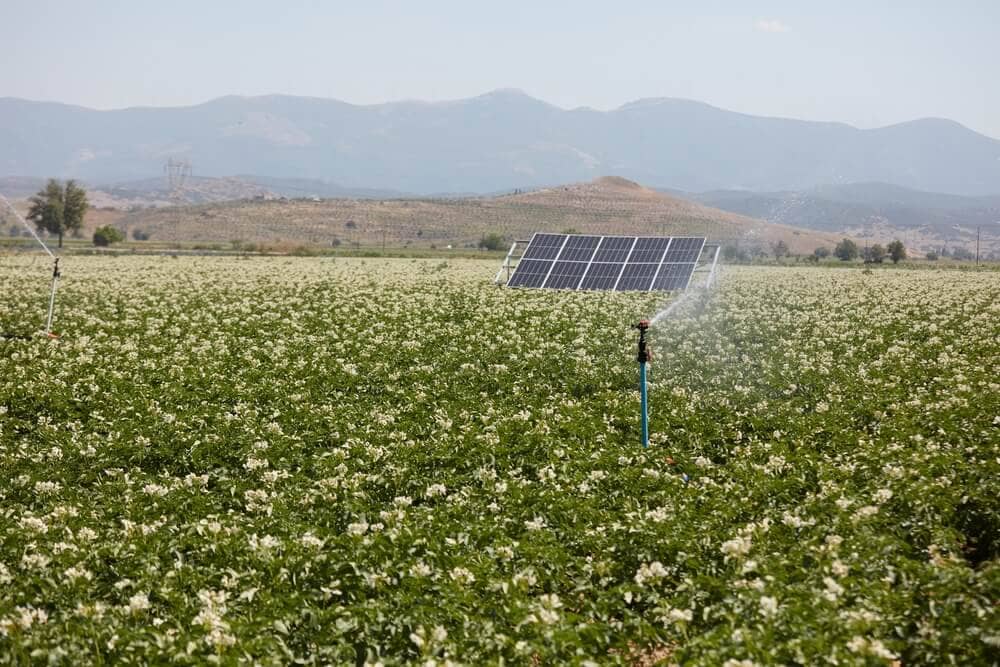
Yes, in many cases it is. For farms with irrigation pumps, boreholes, packhouses, refrigeration, workshops, or other energy-intensive operations, solar can reduce exposure to rising electricity tariffs, improve operational reliability during power disruptions, and support stronger long-term cost control. The real value depends on the farm’s load profile, irrigation schedule, site conditions, and whether the goal is lower bills, better resilience, or both.
Table of Contents
ToggleSolar for irrigation systems, reducing costs, powering irrigation, and beating load shedding
For many South African farming businesses, electricity is no longer a background operating cost. It directly affects whether irrigation runs on time, whether cold storage remains stable, and whether daily production can continue without interruption. That is why more farm owners and agricultural businesses are asking whether solar for farms, agriculture solar, and solar farming in South Africa make commercial sense.
The short answer is that solar is often most valuable where farming operations rely on predictable daytime power demand. Irrigation pumps are one of the clearest examples. When a farm depends on pumping water at the right time, energy disruption can affect crop health, scheduling, labour efficiency, and yield outcomes. A well-designed solar solution can help reduce grid dependence during daylight pumping hours while also lowering long-term electricity spend. In water-stressed environments, some solar-agriculture models can also support better microclimates and water efficiency, especially under agrivoltaic designs that are tailored to the crop and site.
This is also why the conversation around solar and farming has expanded. It is no longer only about rooftop systems on sheds or backup power for a farmhouse. It now includes broader questions about solar power for farms, agricultural solar, and how land, energy, and productivity can be managed together more strategically.
Agriculture and farming are related, but not identical
It helps to separate two terms that are often used interchangeably. Agriculture is the broader science, business, and system of cultivating soil, producing crops, raising livestock, and managing food and resource production at different scales.
Farming is the practical, day-to-day execution of those activities on the ground. In other words, farming is part of agriculture, while agriculture includes the wider commercial, technical, environmental, and economic framework around it. That distinction matters in solar planning. A smallholding with modest pump usage, light storage demand, and limited infrastructure may need a very different solution from a large commercial agricultural operation running irrigation zones, cooling systems, packhouses, workshops, staff facilities, and multiple production processes. So while people often search for solar for farming and solar for farms, the right system is shaped by the realities of the specific agricultural operation, not only by the label used.
Why solar has become more relevant to farms
There are three main reasons interest has grown so strongly. The first is cost pressure. Electricity tariffs and energy uncertainty have made it harder for farms to forecast operating costs. The second is reliability. Where power interruptions disrupt irrigation or cooling, the cost of downtime can go beyond the utility bill and affect production itself. The third is long-term resilience. Solar gives farms an opportunity to move part of their energy supply onto the property, creating more control over daytime demand and, when paired with storage or backup systems, better protection against disruption.
This is why solar for farms often performs best where the farm has a clear daytime load. If irrigation pumps, boreholes, refrigeration, or processing equipment operate during daylight hours, solar generation can be aligned more effectively with actual use. That improves the business case. Where usage is more uneven, the design strategy may need to include storage, load shifting, or hybrid backup support to make the investment work harder.
Solar for irrigation systems, where the practical value is often strongest
Irrigation is one of the most practical and commercially relevant uses of farm solar. Pumps are energy-hungry, irrigation schedules are time-sensitive, and delays can create knock-on effects across the farm. In these cases, solar power for farms is not only about going green. It is about keeping water moving when it needs to move. For many farms, the strongest return comes when solar supports daytime pumping. Instead of relying entirely on grid electricity during the day, the system can offset a meaningful share of pump demand. That reduces operating costs while improving resilience. In some cases, farms may also combine solar with variable speed drives, smarter scheduling, or storage depending on the crop, irrigation method, and tariff structure.
This is especially relevant in areas where water efficiency matters. Agrivoltaic systems may also improve water-use efficiency, reduce temperatures, and create more resilient growing conditions in water-scarce regions, although performance varies by crop and design. That does not mean every irrigation farm should jump straight into agrivoltaics, but it does show why the broader relationship between agriculture solar power and water management is gaining attention.
Is solar worth it for farms from an ROI point of view?
In many cases, yes, but only when the system is designed around the real farm load. A farm solar investment should never be judged only by panel count or headline system size. The better question is how well the design matches the farm’s actual energy demand across the day, across the season, and across the production cycle. A system that offsets expensive daytime usage, reduces generator reliance, protects critical operations, or avoids repeated production losses may deliver value in more ways than one.
That is why return on investment for agricultural solar is about more than a simple payback calculation. It includes reduced electricity spend, protection from tariff increases, operational continuity, and in some cases the ability to plan production with more confidence. Where farms rely heavily on pumps, cooling, or predictable daytime activity, the business case is usually stronger than on properties with low or highly irregular demand.
Agrivoltaics and solar farms are not the same thing
This distinction is important because the search terms overlap, but the intent is different.
A solar farm or photovoltaic power station is generally a large-scale, ground-mounted solar installation built primarily to generate electricity for the grid. These projects often span large areas and use rows of photovoltaic modules, inverters, transformers, and sometimes tracking farm power solar systems to maximise energy production.
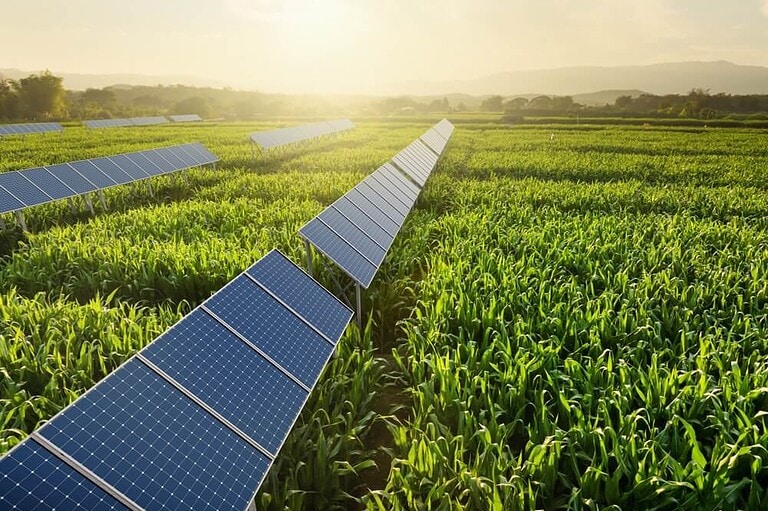
Large utility-scale solar farms can feed high-voltage transmission networks, while smaller distributed solar farms may serve local communities or nearby infrastructure. Agrivoltaics, by contrast, is a dual-use approach. It combines solar generation with agricultural activity on the same land. That could mean crops grown under or between elevated panels, sheep grazing between arrays, or pollinator-supporting vegetation integrated into the site. The core idea is to improve land-use efficiency by producing both food or agricultural value and energy from the same footprint.
So when someone searches solar farmland, solar on farmland, or solar farming, it is worth asking which of these they really mean. Are they looking for a solar solution to power the farm, or are they exploring land-use models where energy generation becomes part of the agricultural land strategy?
The real promise of agrivoltaics
Agrivoltaics is gaining interest because it addresses a problem that traditional debates often treat as a trade-off: land for food or land for energy. In the right context, agrivoltaics aims to reduce that conflict.
Research and field experience suggest that agrivoltaic systems can improve land productivity overall in some settings, with gains depending on crop type, climate, and design. Some systems also improve water-use efficiency, and lower microclimate temperatures may support certain crops under hot conditions. However, not every crop responds positively, and high-shade conditions can reduce yields for light-demanding crops. In other words, agrivoltaics is promising, but it is highly site- and crop-specific.
That nuance matters. Shade-tolerant crops or crops in harsh heat conditions may benefit more than crops that require strong direct sunlight. Grazing applications can also work well where livestock such as sheep can coexist with ground-mounted infrastructure. Pollinator habitats and vegetation management provide another avenue for dual-use benefits. The point is not that agrivoltaics is automatically better than conventional farm solar. The point is that it opens another category of possibility where the land strategy, crop strategy, and energy strategy are designed together.
Key benefits often associated with solar on farmland
One reason solar attracts attention in agriculture is that it can create value beyond a lower electricity bill. Where a farm installs solar primarily for self-consumption, the benefit may be lower operating costs and reduced exposure to supply disruptions. Where landowners participate in broader solar development models, there may also be potential for more stable income than certain variable crop markets, although that depends heavily on the project model, lease terms, regulation, and the long-term land strategy.
In agrivoltaic contexts, the possible benefits can include better moisture retention in shaded soil, reduced evaporation, support for some shade-tolerant crops, and improved microclimates that keep panels cooler and therefore more efficient. Canal-top solar, used in water-scarce settings, is another example of how agri solar thinking is becoming more integrated and adaptive.
Land use, soil health, and policy still matter
Solar on farmland is not just a technical question. It is also a land-use and policy question.
Some stakeholders argue strongly for protecting prime farmland from poorly planned energy development. Others support well-designed smart solar or dual-use models that aim to preserve soil quality and future agricultural use.
Long-term research continues to assess how solar development affects soil condition, biodiversity, and agricultural productivity over time. The answer is unlikely to be one-size-fits-all. Quality of design, site selection, mounting approach, vegetation management, and long-term stewardship all matter.
Regulation and zoning can also affect farmland values and the economics of solar development. That is particularly relevant when agricultural land is being considered for large-scale grid projects rather than for self-consumption by the farm itself. For South African farming businesses looking mainly to reduce costs and improve resilience, the more immediate question is often simpler: what kind of solar solution can power the operation without compromising the productivity of the land?
Agricultural solar solutions versus smallholding solar
Not every rural property should be treated the same. A commercial agricultural operation may need a more engineered solution that accounts for pump loads, packhouses, cold rooms, seasonal usage shifts, and multiple operating zones. This kind of agriculture solar project usually requires closer analysis of load data, future expansion, and business continuity priorities.
A smaller farm or smallholding may have a simpler requirement. It might focus on a borehole pump, basic outbuildings, security, limited refrigeration, or partial daytime offset. The system size, budget, and design logic can therefore be very different. That is why it helps to separate agriculture solar power for larger commercial operations from smallholding solar needs. Both sit within the broader category of solar for farming, but they are not necessarily the same commercial or technical problem.
South Africa’s large utility-scale solar projects show how quickly the energy landscape is changing. These are not farm power systems, but they do reflect the broader shift toward renewable energy across the country. For farming businesses, that wider shift strengthens the case for asking more practical questions about self-generation, resilience, and long-term energy strategy on the farm itself.
Take the Next Step Towards Smarter Solar Farming
So, is solar worth it for farms?
For many South African farms, yes, especially where there is meaningful daytime demand, irrigation reliance, or costly exposure to outages and tariff increases. The strongest projects are not driven by hype. They are driven by careful design, realistic operational analysis, and a clear understanding of whether the goal is savings, resilience, or a combination of both.
The next step is not to ask whether solar is broadly good or bad for agriculture. The better question is which solar model best fits the land, the operation, the crop, the water needs, and the long-term business plan. In some cases, that will be a practical system designed to power pumps and reduce energy costs. In others, it may lead to wider land-use thinking around agrivoltaics and future energy diversification. Either way, solar for farms, agriculture solar, and solar farming in South Africa are no longer fringe topics. They are increasingly part of the mainstream business conversation around cost control, irrigation reliability, and farm resilience.
If you are ready to explore whether solar is the right fit for your farm, contact Affordable Power Solutions for tailored advice on reducing energy costs, improving irrigation reliability, and planning for long-term resilience.
Frequently Asked Questions
Agrivoltaics combines solar generation with active agricultural use on the same land, such as crops, grazing, or pollinator-supporting vegetation. A solar farm is usually a large-scale photovoltaic installation built mainly to generate electricity for the grid.
In many cases, yes. Solar is especially effective where irrigation demand is predictable during daylight hours, although the right design depends on the pump load, schedule, and whether storage or backup is needed.
Solar power systems, such as the ones provided by Affordable Power Solutions, can significantly decrease dependency on Eskom and hence reduce the impact of load shedding. By investing in solar power and other alternative energy solutions, homeowners can protect themselves against power outages and maintain a steady supply of electricity.
No. Results vary by crop, climate, shading level, and design. Some crops and conditions benefit, while light-demanding crops may suffer under too much shade.
It can in some designs. Agrivoltaic systems may improve water-use efficiency and create cooler microclimates, which can reduce water stress in certain conditions.
No. Utility-scale projects are generally grid-focused power stations, while farm solar is typically designed to offset on-site agricultural demand such as irrigation, pumping, cooling, and day-to-day operations.